

Home / News & Applications /Applications
The demand for renewable energy sources is experiencing a significant increase, with solar power at the forefront of this trend. Photovoltaic (PV) power generation has gained considerable traction due to its environmentally friendly and sustainable characteristics. However, the substantial costs associated with PV systems have posed challenges for many potential investors and consumers. This article aims to explore effective strategies for reducing the costs of PV power generation. Furthermore, we will examine the innovative approaches employed by Anern in achieving cost reductions within the industry.
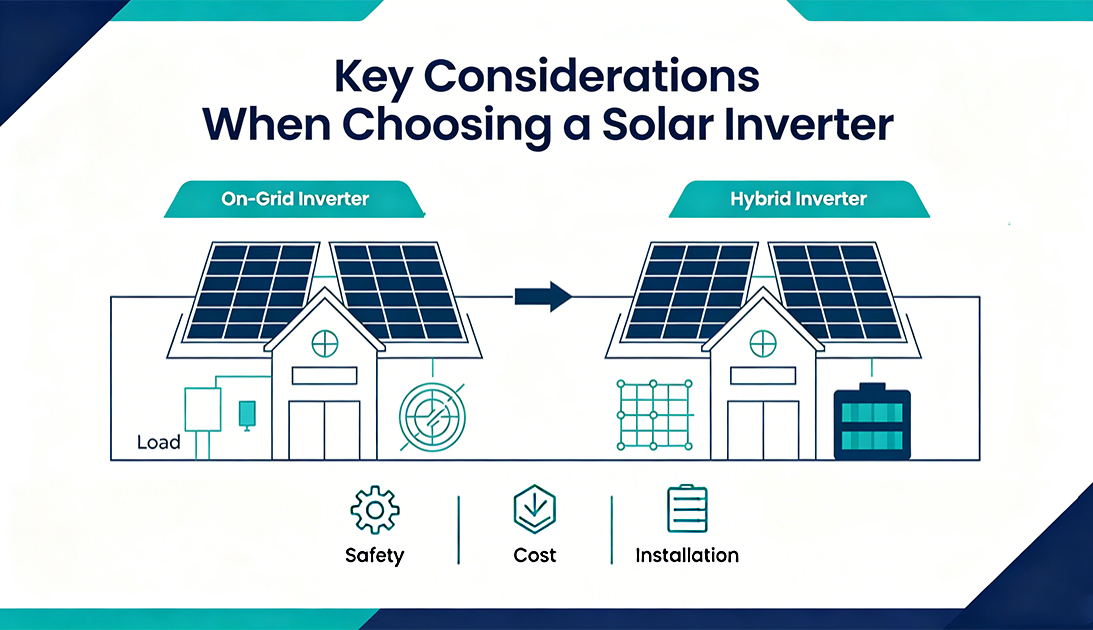
Anti-Islanding Protection – The Safety Bottom Line.
On-grid inverters must incorporate anti-islanding protection, which immediately shuts down the inverter upon grid failure, this is a mandatory national standard. Hybrid inverters, when operating in off-grid mode, physically disconnect from the grid, thus eliminating islanding risks. However, it is essential to verify that the transition logic is correctly configured by the installer to avoid switching delays or failures.
Cost Considerations – Upfront Investment vs Long-Term Value.
An on-grid system offers a clear and modest upfront cost (inverter + installation + interconnection fees) and requires virtually no ongoing maintenance. A hybrid system, due to its added functionality and mandatory battery storage, involves a significantly higher initial outlay. Over time, however, its ability to provide backup power and enable energy arbitrage (peak shaving and load shifting) can reduce reliance on the grid and deliver meaningful savings, especially in regions with volatile or time‑varying electricity prices.
Installation Expertise – Technical Demands and Commissioning Complexity.
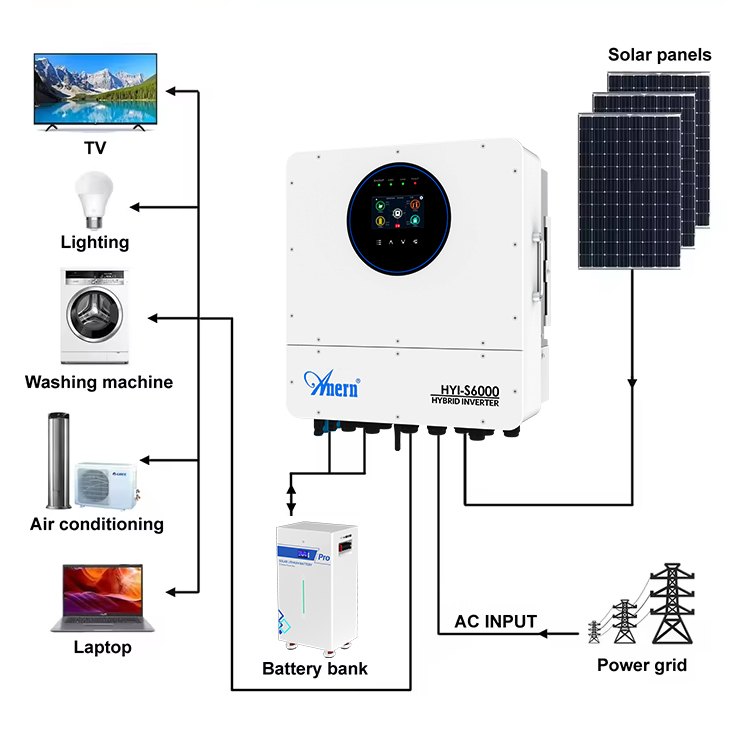
On-grid inverters require standard electrical wiring and compliance with local utility interconnection rules. Hybrid inverters, by contrast, demand more sophisticated commissioning: battery charge/discharge parameters, off-grid switching thresholds, and load prioritization must all be precisely calibrated. It is strongly recommended to use certified or factory-trained installers for hybrid systems.
Back to the Top

5th Floor, Building B, No.2817 Kaichuang Avenue, Science Zone, Huangpu District, Guangzhou, China
+8620-89269660 | 89269662 | 89269669


